Industrial Automation, Control System Integration, and Smart Robotics for Modern Packaging Production

End-to-End Industrial Automation and Smart Factory Integration

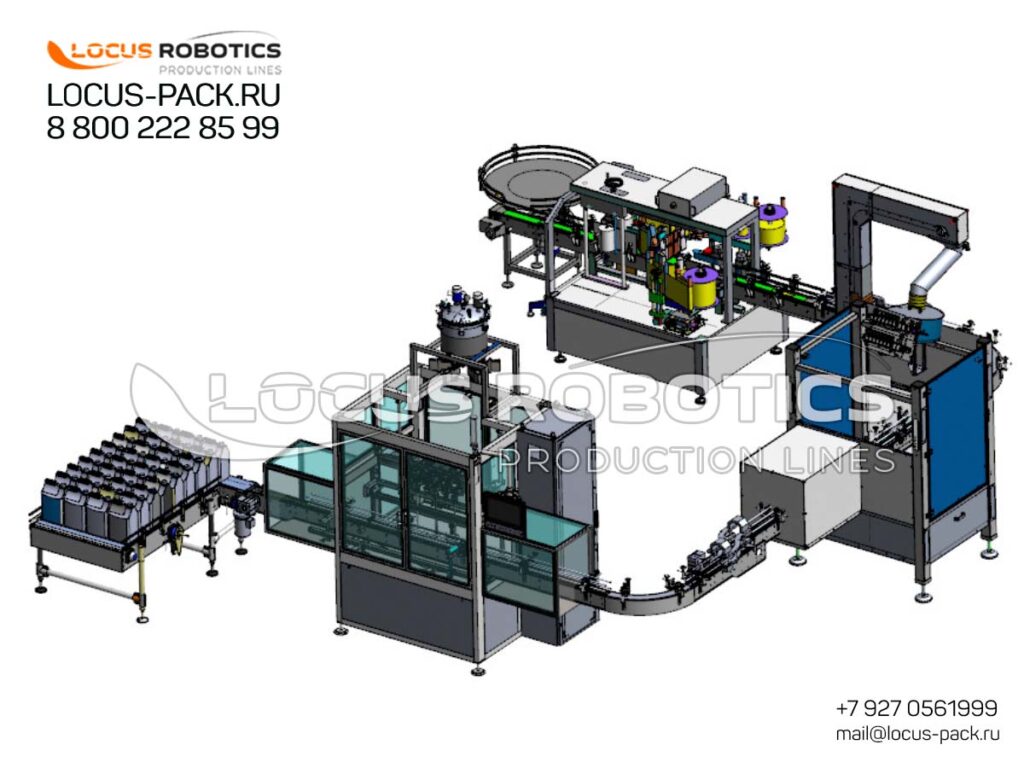
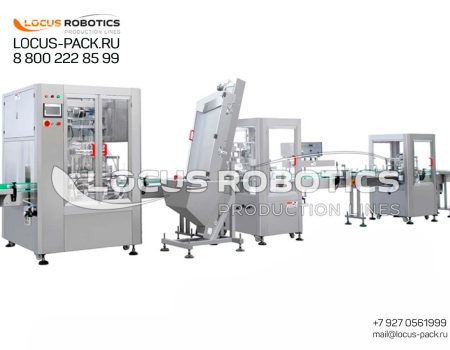
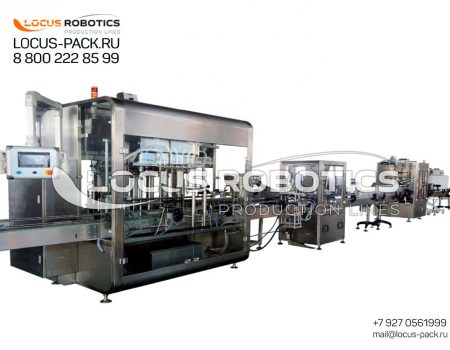
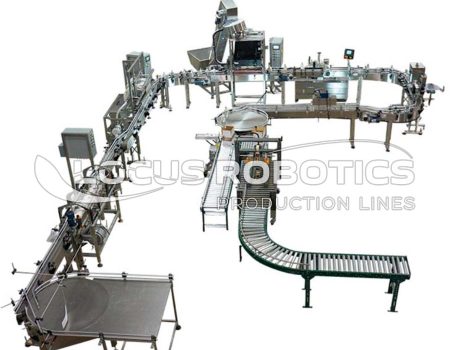
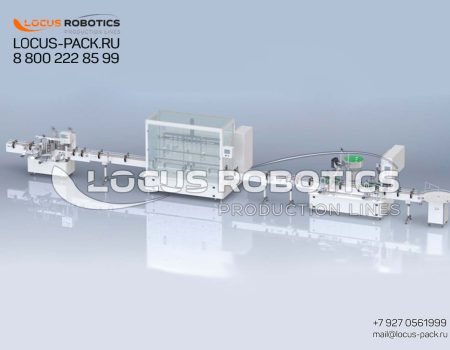
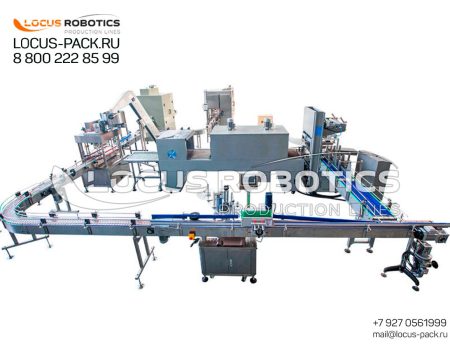
Elevate your packaging operations from a collection of individual machines to a synchronized, intelligent, and data-driven production ecosystem with our comprehensive End-to-End Industrial Automation and Smart Factory Integration services. We specialize in designing and implementing the advanced control layer that unifies your entire production floor—seamlessly integrating high-speed rotary filling machines, precision cappers, automatic labelers, vision inspection systems, and robotic palletizers under a single, intelligent command center. Our solutions go far beyond simple machine connectivity; we deploy sophisticated Supervisory Control and Data Acquisition (SCADA) systems and Manufacturing Execution Systems (MES) to provide real-time visibility into every aspect of your line, from raw material consumption and machine Overall Equipment Effectiveness (OEE) to detailed product traceability and quality compliance reporting.

By incorporating AI-powered machine vision for 100% inline inspection of fill levels, cap placement, label accuracy, and packaging integrity, we virtually eliminate human error and costly product recalls. Furthermore, our Industrial Internet of Things (IIoT) platform enables secure remote access for real-time monitoring from any location, predictive maintenance alerts to prevent unplanned downtime, and data analytics that uncover hidden inefficiencies. Designed for manufacturers in Southeast Asia, Africa, the Middle East, and Eastern Europe, our robust and scalable automation platforms are built to deliver a rapid and measurable return on investment through dramatic increases in productivity, significant reductions in operational waste, and enhanced compliance with stringent international standards like GMP, FDA, and HACCP. Begin your transformation by exploring our Automated Conveyor and Material Handling Systems which form the physical backbone for this digital intelligence.

Beyond Standalone Machines: The Strategic Imperative of Holistic Production Line Automation

In today’s globally competitive manufacturing landscape, possessing individual islands of advanced machinery—no matter how fast or precise—is no longer a sufficient guarantee of profitability or market leadership. The true transformative power lies in the seamless orchestration of all these assets into a coherent, responsive, and self-optimizing production organism. This is the core mission of holistic industrial automation. At Locus Robotics, we address the critical pain points of modern facilities: unsynchronized line speeds causing bottlenecks at the capper or labeler, manual quality checks that are slow and unreliable, catastrophic unplanned downtime due to a minor component failure, and a complete lack of data to explain why OEE figures are below target. Our automation philosophy centers on creating a central «mission control» for your packaging line. This integrated system doesn’t just start and stop machines; it intelligently manages the flow, making micro-adjustments in real-time—for instance, slightly speeding up a downstream conveyor if a filler temporarily increases its output, or flagging a trending increase in torque from a capping head long before it leads to a jam or misapplied cap.

This level of control transforms your production from a reactive, fire-fighting operation into a proactive, predictable engine of growth. It provides plant managers and business owners with unprecedented transparency: they can see exactly how many bottles were produced per shift, identify which machine caused the most micro-stoppages, track yield loss at every station, and generate auditable reports for regulatory compliance at the click of a button. For businesses targeting export markets or dealing with stringent retailers, this data integrity is not a luxury; it is a commercial necessity. The strategic decision to automate is, therefore, an investment in fundamental business resilience, operational excellence, and the capacity to scale efficiently without a linear increase in operational complexity or overhead costs.

Our Core Automation Stack: SCADA, MES, PLCs, and Robotics for Total Process Control

We implement a layered, enterprise-grade technology stack to deliver different tiers of control and intelligence, ensuring both robust real-time operation and strategic business insight.

  • Programmable Logic Controller (PLC) Network – The Reflex System: At the machine level, we standardize or upgrade control hardware to a unified family of high-performance PLCs (from leaders like Siemens SIMATIC, Rockwell Automation Allen-Bradley, or Schneider Electric). These industrial computers act as the reflexive nervous system, executing millisecond-level control logic to manage motors, valves, sensors, and actuators on individual machines like fillers, cappers, and labelers. Standardizing this «iron» across your line simplifies maintenance, training, and spare parts inventory.

  • Supervisory Control and Data Acquisition (SCADA) – The Central Nervous System: This is the primary human-machine interface (HMI) for your operators and supervisors. Our customizable SCADA software (e.g., Ignition, WinCC, or FactoryTalk) provides a dynamic, graphical overview of the entire production line on large screens. Operators can start/stop sections, view live throughput counters, acknowledge alarms, and access detailed diagnostic screens. The system continuously historizes data—tracking temperatures, pressures, speeds, and fault codes—creating a searchable record of every event on the line for root-cause analysis.

  • Manufacturing Execution System (MES) – The Cognitive Brain: For higher-order management, we integrate MES solutions. This layer translates raw operational data into business intelligence. It manages production orders from your ERP, tracks material lots for full traceability (crucial for pharma and food), calculates real-time OEE, and enforces standard operating procedures (SOPs). It answers strategic questions: What was the exact yield for Batch #12345? What is the changeover time between Product A and Product B? Is the line performing to its theoretical capacity?

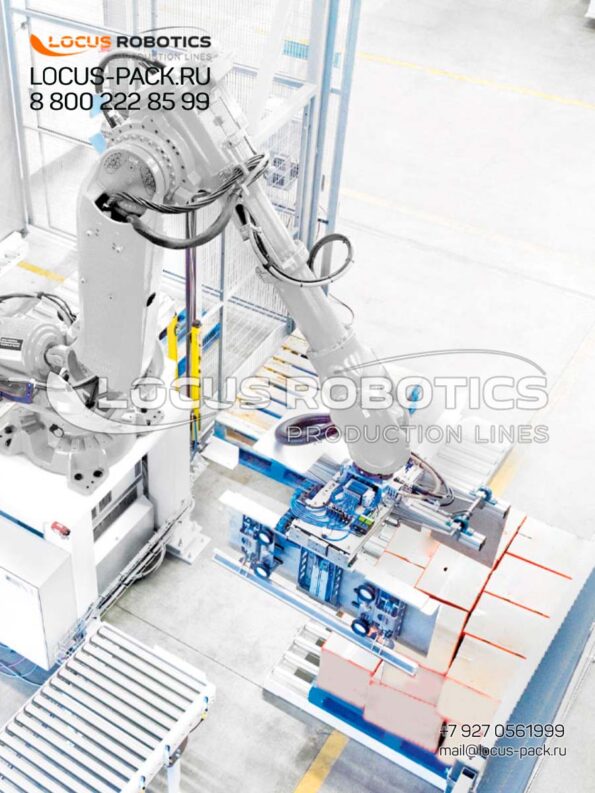
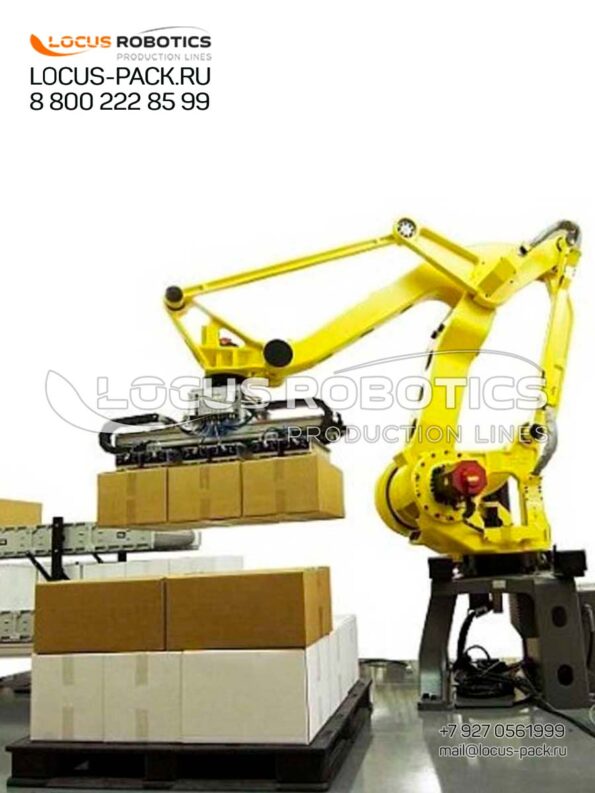
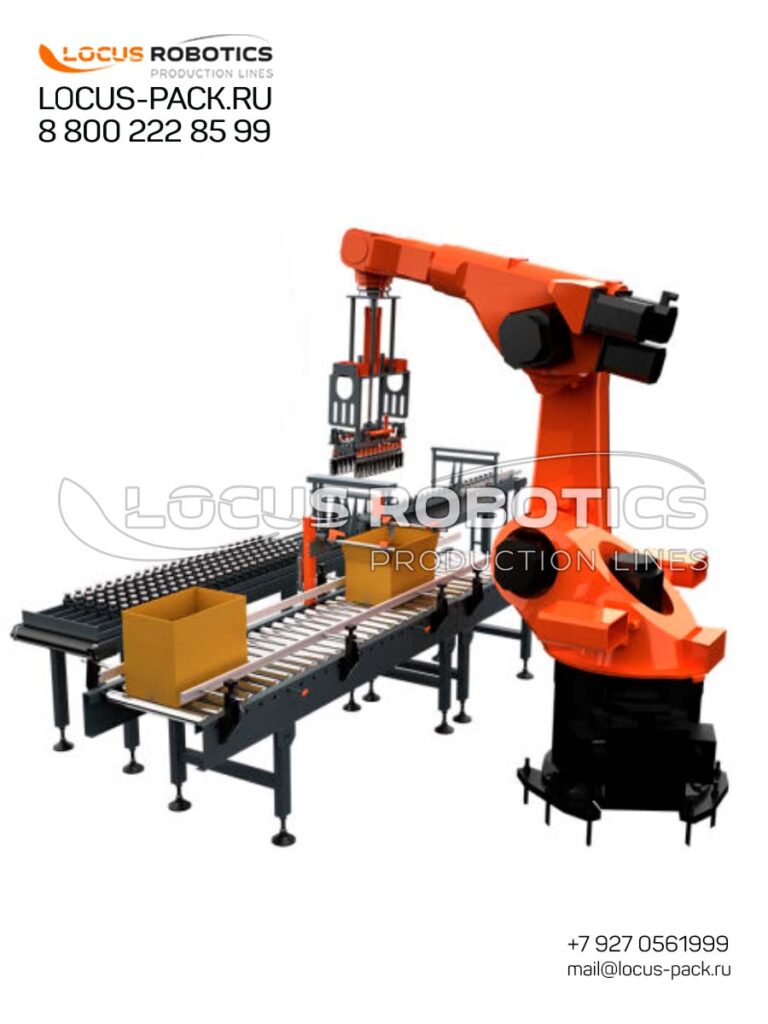
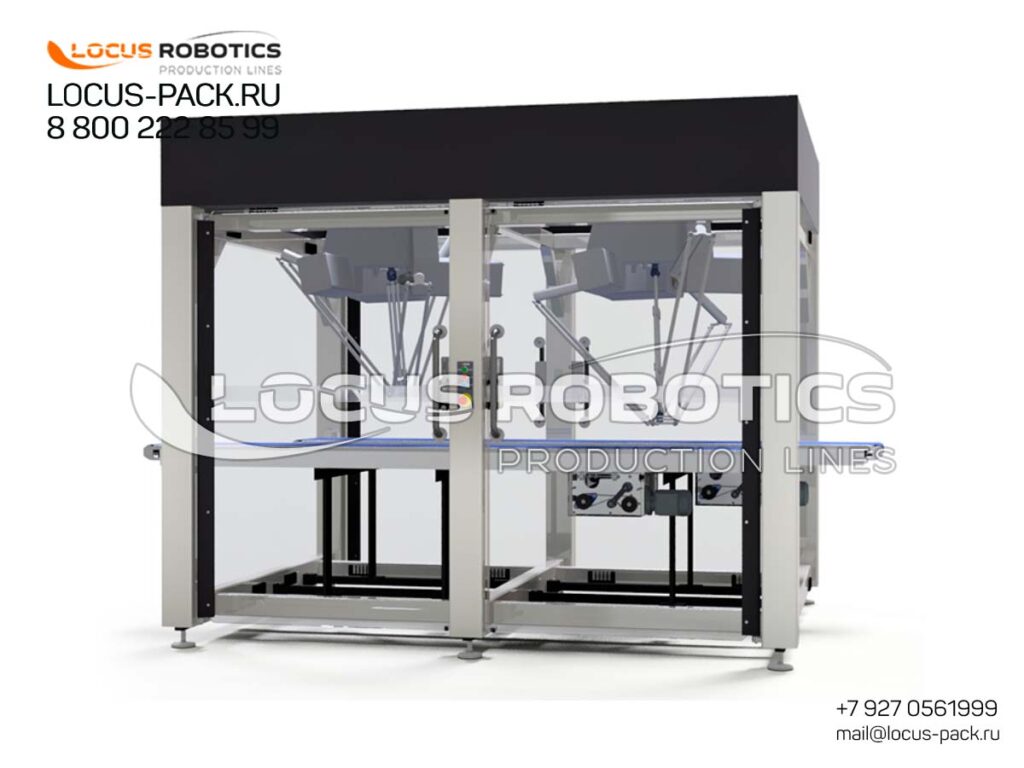
  • Robotic Automation Cells – The Dexterous Hands: Our automation stack physically interacts with the product through integrated robotic systems. These can range from 6-axis articulated robots for complex pick-and-place or palletizing tasks to collaborative robots (cobots) working safely alongside personnel for loading/unloading or assembly. These robots receive their instructions directly from the central PLC or SCADA system, ensuring their movements are perfectly synchronized with the conveyor flow and upstream/downstream processes.

Industrial Automation, Control System Integration, and Smart Robotics for Modern Packaging Production

The Power of Machine Vision: AI-Powered Inspection for 100% Quality and Traceability

Industrial Automation, Control System Integration, and Smart Robotics for Modern Packaging Production

Human visual inspection is a major source of error, inconsistency, and cost in packaging lines. Our advanced machine vision systems eliminate this bottleneck by providing relentless, pixel-perfect inspection at full line speed.
  • Comprehensive Inline Quality Assurance: We deploy high-resolution industrial cameras with specialized lighting at critical control points. These systems perform a multitude of checks: verifying fill levels in transparent or opaque containers, inspecting for missing, crooked, or tampered caps, ensuring label presence, positioning, and legibility (including barcode and QR code grading), and checking for container defects like cracks, chips, or sealing flaws. Any non-conforming product is automatically rejected by a pneumatic pusher or diverted to a rework lane.
  • AI and Deep Learning for Complex Defects: Beyond rule-based inspection, we implement deep learning-based vision systems. These can be trained to identify subjective or highly variable defects that are difficult to program with traditional rules—such as subtle cosmetic scratches on a luxury perfume bottle, inconsistent glue patterns on a carton flap, or foreign material contamination in a food pouch. The system learns from examples, continuously improving its accuracy and reducing false rejects.

  • Data-Rich Traceability and Analytics: Every inspection image and result is time-stamped and logged by the MES/SCADA system. This creates an immutable digital quality record for each batch. You can trace back through the data to find the first occurrence of a defect, correlate it with machine parameters from that time, and implement corrective actions. This capability is invaluable for quality audits, customer complaints, and continuous improvement initiatives.

IIoT & Remote Access: Real-Time Monitoring, Predictive Maintenance, and Global Support

Our automation systems are built for the connected era of Industry 4.0, bridging the physical gap between your factory floor and management teams anywhere in the world.

  • Secure Remote Monitoring Dashboard: Through a secure, encrypted Virtual Private Network (VPN) or cloud platform, authorized personnel can access a real-time view of the production line from a desktop, tablet, or smartphone. Plant managers can monitor shift progress from home, and corporate leadership can view performance dashboards across multiple facilities. This is especially powerful for companies with regional headquarters managing plants in different countries.

  • Predictive Maintenance and Health Analytics: The IIoT platform doesn’t just monitor production; it monitors the health of the equipment itself. By analyzing trends in data like motor current draw, vibration frequencies, bearing temperatures, and pneumatic pressure cycles, our systems can predict component failures before they occur. The system generates proactive maintenance alerts, recommending service or part replacement during scheduled downtime, thus avoiding catastrophic breakdowns that halt production for hours or days.

  • Global Technical Support and Diagnostics: This capability revolutionizes after-sales support. If a line fault occurs, our support engineers—whether located in Europe, Asia, or the Americas—can securely log into the system (with your permission) to view live data, examine alarm histories, and even perform remote diagnostics on the PLC code. This «remote triage» allows us to resolve up to 70% of software or configuration issues without a costly and time-consuming site visit, a critical advantage for ensuring maximum uptime for our international clients.

Industrial Automation, Control System Integration, and Smart Robotics for Modern Packaging Production

Our Proven Automation Implementation Methodology for Guaranteed ROI

Industrial Automation, Control System Integration, and Smart Robotics for Modern Packaging Production

We follow a structured, phase-gated project methodology to ensure your automation project is delivered on time, on budget, and meets all performance specifications.

  1. Phase 1: Discovery and Digital Twin Simulation (4-6 weeks): We conduct an in-depth audit of your current processes, equipment, and pain points. Our engineers then build a functional digital twin of your proposed automated line. This virtual model is used to simulate production, optimize control logic, test emergency scenarios, and validate throughput before any hardware is ordered. We present this simulation alongside a detailed Functional Design Specification (FDS) for your approval.

  2. Phase 2: Hardware Standardization & Software Development (10-16 weeks): Concurrently, we procure and configure the standard PLCs, HMI panels, network switches, and vision hardware. Our software team develops the complete SCADA/MES application, PLC programs, and vision inspection recipes offline, using the digital twin for testing.

  3. Phase 3: Staged Installation & Factory Acceptance Testing (FAT) (2-4 weeks): We manage the onsite installation in stages to minimize disruption. Once the system is wired, we conduct a rigorous FAT. We run the line with actual or mimic products, demonstrating all functions, safety systems, and achieving the guaranteed performance metrics. Your team is fully involved in this testing and sign-off.

  4. Phase 4: Commissioning, Training, and Sustained Support (Ongoing): We fine-tune the system with your live product. We then deliver extensive, role-based training for operators, maintenance technicians, and production supervisors. We provide all documentation and source code. Our support agreement begins, offering remote monitoring, preventative maintenance services, and software updates to protect your investment for the long term.

Detailed Technical Specifications of Our Automation Control Platforms

  • Control Hardware: Primary controllers: Siemens S7-1500/1200 series or Allen-Bradley ControlLogix/CompactLogix PLCs. Safety controllers: Siemens F-CPU or Allen-Bradley GuardLogix. Industrial PCs for SCADA/MES servers and vision processing.

  • Software Platforms: SCADA: Inductive Automation Ignition (unlimited tags, highly customizable) or Siemens WinCC. MES: Custom modules built on Ignition Platform or integration with POMS/Mom. Vision Software: Cognex VisionPro, Keyence CV-X, or deep learning platforms.

  • Networking & Security: Stratix or Scalance managed industrial Ethernet switches. Network segmentation into cell/area zones (Level 1/2) and supervisory zones (Level 3). Implementation of firewalls, VPNs, and role-based user authentication with audit trails for all system access.

  • Data & Reporting: SQL or Time-Series databases for high-speed data historization. Customizable dashboard for real-time OEE, production counts, downtime Pareto charts, and quality yield reports. Automated report generation (PDF/Excel) for shift, daily, and batch summaries.

  • Interfacing Standards: Full support for OPC UA (Unified Architecture) for secure, platform-independent data exchange, EtherNet/IP, Profinet, and Modbus TCP to connect to virtually any modern or legacy industrial device on your line.

Industrial Automation, Control System Integration, and Smart Robotics for Modern Packaging Production

Industry-Specific Automation Solutions: Pharma, Food, Cosmetics, Chemicals

  • Pharmaceutical & Biotechnology: Our systems are validated for GMP/GLP compliance. Features include electronic batch record (EBR) integration, 21 CFR Part 11 compliant audit trails with electronic signatures, and environmental monitoring (EM) system integration for temperature and pressure in cleanrooms. Full track-and-trace serialization support.

  • Food & Beverage: Focus on HACCP compliance and allergen control. Systems integrate metal detection and X-ray inspection data directly into the batch record. CIP/SIP process automation and reporting. High-level traceability from raw ingredient to finished case.

  • Cosmetics & Personal Care: Emphasis on high-mix, low-volume production agility. Our MES manages intricate bill of materials (BOM) and recipe changes. Vision systems ensure premium appearance standards. Fast changeover support through recipe recall on HMI.

  • Chemicals & Industrial: Built for hazardous area compliance (ATEX/IECEx) where required. Manages precision batching of raw materials, lot tracking for hazardous components, and safety interlock logging. Robust systems designed for harsh industrial environments.

Industrial Automation, Control System Integration, and Smart Robotics for Modern Packaging Production

Overcoming Investment Hurdles: A Detailed ROI and Total Cost of Ownership Analysis

Industrial Automation, Control System Integration, and Smart Robotics for Modern Packaging Production
  • Quantifying the Return: A detailed financial model is central to our proposal. We calculate ROI based on:

    • Productivity Uplift: A 15-30% increase in OEE from reduced downtime and faster changeovers translates directly to more saleable product.

    • Labor Efficiency: Automating manual quality checks, data logging, and report generation can reallocate 2-4 FTEs to higher-value tasks.

    • Quality & Waste Savings: Reducing product giveaway, minimizing recalls, and cutting packaging material waste by 3-7% through precise control.

    • Maintenance Cost Avoidance: Predictive maintenance can reduce unplanned downtime by up to 50% and extend machine life.

  • Total Cost of Ownership (TCO) Perspective: We present a clear 5-year TCO analysis, comparing the upfront project cost against the cumulative savings in labor, waste, downtime, and energy. We also highlight soft benefits: improved regulatory compliance (avoiding fines), enhanced market reputation for quality, and the strategic agility to take on new, complex customer contracts.

  • Phased Investment Pathway: For clients with budget constraints, we design a multi-phase roadmap. Phase 1 might be core SCADA/PLC integration for basic control and data collection. Phase 2 adds machine vision. Phase 3 implements full MES and advanced analytics. This approach spreads the investment while delivering incremental ROI at each step.

Industrial Automation, Control System Integration, and Smart Robotics for Modern Packaging Production

Got questions? Get in touch!