
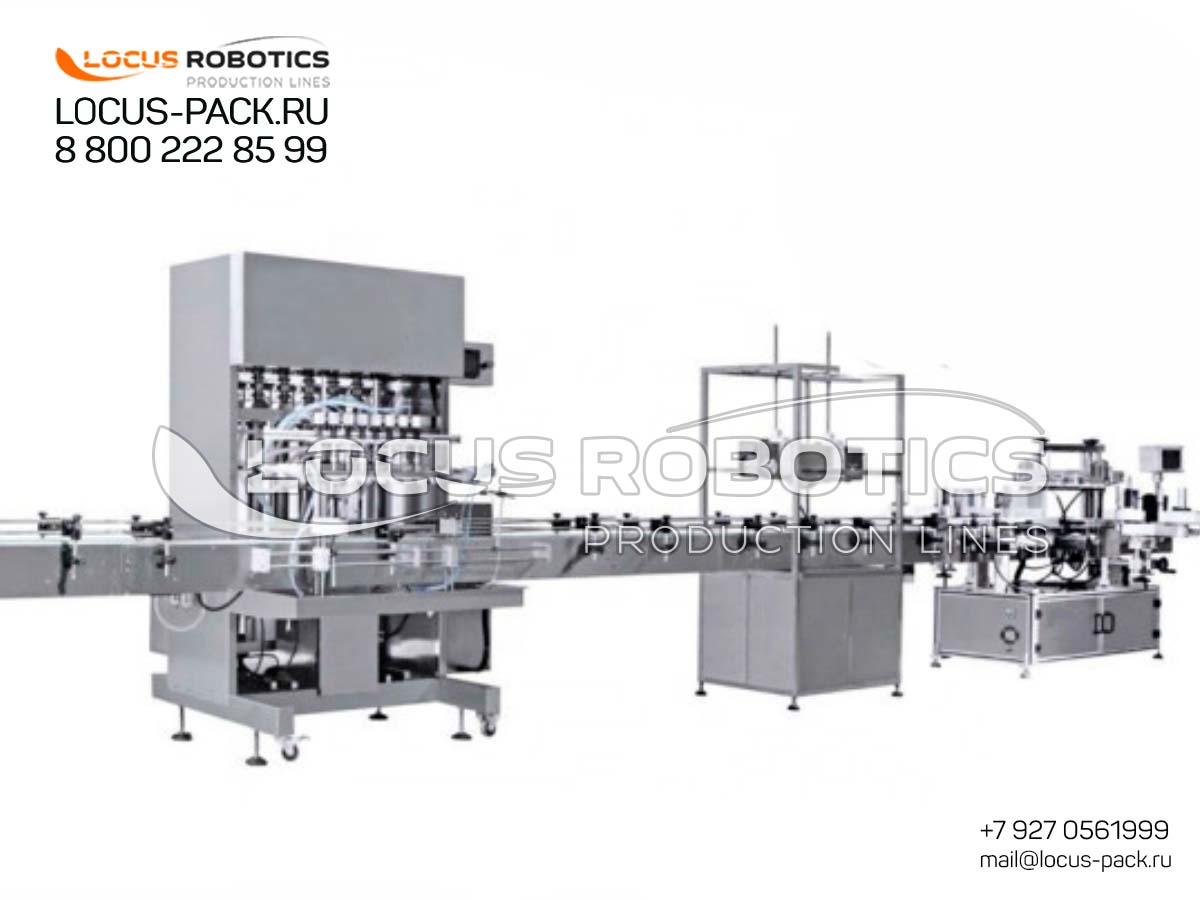
Description
Precision Linear Automation for High-Speed Bottle and Jar Packaging Across Industries
In the competitive landscape of consumer packaged goods, the ability to rapidly adapt packaging operations to market demands is a decisive advantage. The R-200 Linear Filling and Capping Line is architected to provide this critical operational agility. Unlike rotary systems that require complex starwheels and large footprints, the linear configuration offers a streamlined, in-line process that is inherently simpler, easier to access for operators, and requires less space per production unit. This design philosophy makes it exceptionally suitable for facilities that run short batches, require frequent product changeovers, or have floor space constraints. The line’s inherent flexibility allows it to serve as a central workhorse for diverse sectors—from food and beverage companies packaging juices and condiments to chemical firms filling cleaning agents and automotive fluids, all on the same foundational platform with quick-change tooling and settings.
Engineered for Versatility: Seamlessly Transition Between Diverse Container Formats and Product Types
The true power of this system lies in its engineered adaptability. The conveyor and guiding systems are fully adjustable to accommodate containers ranging from small 50ml pharmaceutical vials to large 1-gallon HDPE jugs, and from narrow-necked PET beverage bottles to wide-mouth glass jars for sauces or cosmetics. This is facilitated by a modular design where change parts for guides, lifting platforms, and nozzle holders can be swapped efficiently. The linear piston filler’s accuracy is independent of container shape, ensuring that whether you are filling a round bottle or a square jar, the measured volume remains precise. This versatility protects your capital investment, allowing you to expand your product portfolio without the need for entirely new packaging lines, thereby future-proofing your production capabilities against evolving market trends.
The Reliability of Linear Press-On Capping: Ensuring Tamper-Evident Seals for Consumer Safety
Securing containers properly is as critical as filling them accurately. This line features a specialized linear press-on (snap) capper designed explicitly for PET caps and other plastic closures. The capping head travels linearly with the container, applying a controlled vertical force to press the cap onto the bottle finish. Integrated chuck jaws or rollers then rotate to apply the final torque, ensuring the cap threads engage correctly and the tamper-evident band (if present) snaps securely into place. This method is exceptionally reliable for plastic-on-plastic or plastic-on-glass applications, providing a consistent seal that prevents leakage, preserves product integrity, and offers visible evidence of tampering to the end consumer. The system includes cap sorting and orientation to ensure every cap is presented correctly to the chuck, eliminating misapplied caps and production rejects.
Comprehensive Technical Specifications and Operational Parameters for System Integration
Detailed planning is essential for seamless production integration. The table below provides a complete technical dossier for the R-200 Linear Line.
| Parameter Category | Detailed Specification |
|---|---|
| Primary Application | Liquid & Semi-Liquid Filling: Beverages, Water, Juices, Edible Oils, Sauces, Syrups, Dressings, Dairy. Chemical & Home Care: Detergents, Cleaners, Shampoos, Liquid Soap. Industrial: Lubricants, Additives, Solvents. |
| Container Compatibility | Types: PET Bottles, HDPE Jugs, Glass Bottles & Jars, PP Containers. Neck Finishes: Various standard (PCO 1881, 38mm, 58mm) and custom. Size Range: 50ml to 5 Liters. |
| Closure System | Type: Plastic (PET, PP, HDPE) Screw Caps with tamper-evident bands. Application Method: Linear Travel, Press-On with Torque Rotation. |
| Filling System | Type: Linear In-Line Piston Filler. Number of Heads: Configurable (2, 4, 6, 8). Accuracy: ±0.5% or better. Technology: Positive Displacement with ceramic/SS pistons. CIP/SIP capable. |
| Capping System | Type: Linear Press-On (Snap) Capper. Heads: Single or multiple spindles. Function: Cap pickup, alignment, vertical press, torque application. Torque Range: Adjustable, 2-20 Nm. |
| Conveyance System | Type: Stainless Steel Belt or Chain Conveyor with Side Guides. Speed: Synchronized with filler/capper, variable frequency drive (VFD) controlled. |
| Control & Automation | Brain: Industrial PLC (Siemens, Allen-Bradley). Interface: 15″ Color Touchscreen HMI. Features: Recipe Management (100+), Production Data Logging, OEE Tracking, Remote Diagnostics. |
| Construction & Materials | Frame: 304 Stainless Steel (powder-coated optional). Contact Parts: 316L Stainless Steel, PTFE, Silicone. Guards: Polycarbonate safety shields with interlocked access. |
| Compliance & Standards | Design Standards: CE, ISO 9001, GMP (where applicable). Safety: Complies with EN ISO 13849-1, full guarding and E-Stop system. |
| Utilities & Requirements | Electrical: 380V/3Ph/50Hz or customizable (480V/60Hz). Air: 6-8 bar, clean & dry. Floor Space: Linear layout, approx. L6000 x W1500 mm (base model). Net Weight: ~1500 kg. |
Component Breakdown: Analyzing the Filling, Capping, and Conveyance Modules
High-Speed Linear Piston Filling System with Multi-Nozzle Configuration
The linear piston filler operates on a straightforward principle with sophisticated execution. Containers are indexed precisely beneath each filling nozzle. On the fill cycle, nozzles lower into the containers (top-down filling) or remain stationary for bottom-up filling. High-precision pistons, driven by servo motors or cam mechanisms, dispense an exact volume. The linear arrangement allows for easy scaling—adding heads increases capacity without redesigning the entire machine. Key advantages include no dripping (through anti-drip valves), high speed (up to 200 containers per minute depending on configuration), and easy cleaning with quick-disconnect parts. The system handles products from water-thin to pasty without recalibration.
Linear Press-On Capping Station with Specialized PET Cap Chucking Technology
This capper is engineered for plastic caps. It receives containers from the filler via synchronized conveyor. Caps are fed from an elevator or vibratory bowl, oriented correctly, and picked by the capping head. The head then moves with the container, applying vertical force to seat the cap. Rotating chuck jaws (collet mechanism) or belts then spin the cap to the preset torque. Critical features include torque monitoring (with feedback for quality control), cap presence sensors, and missed cap detection. The system is gentle on containers, preventing deformation of lightweight plastic bottles—a common issue with aggressive capping methods.
Modular Stainless Steel Conveyor System for Flexible Production Layouts
The conveyor is the backbone that ties the system together. Constructed from food-grade stainless steel, it features adjustable side guides that can be tool-less or tool-adjusted. Container positioning is managed by a timing screw or indexing system that precisely spaces containers for filling and capping. The modular design allows for easy extension to add upstream equipment (like bottle unscramblers or rinsers) or downstream modules (like labelers, coders, or case packers). VFD control allows for smooth acceleration/deceleration, minimizing container tipping or product spillage.
Designed for Durability and Ease of Maintenance in Continuous Production Environments
Industrial packaging equipment must withstand 24/7 operation. The R-200 line is built to industrial standards with heavy-duty bearings, hardened guide rails, and sealed electrical components. The extensive use of stainless steel provides corrosion resistance, essential for wet environments and cleaning with aggressive chemicals. Maintenance is simplified through accessible service points, modular sub-assemblies, and comprehensive documentation. A predictive maintenance schedule is supported by the PLC, which can track motor hours and alert operators to required lubrication or inspection intervals, preventing unexpected breakdowns.
Optimizing Throughput and Minimizing Downtime for Maximum Operational Efficiency
Efficiency is measured by Overall Equipment Effectiveness (OEE). This line is designed to maximize OEE through several key features: fast changeover (SMED principles applied with quick-change parts), high mechanical reliability (mean time between failures > 10,000 hours), and consistent quality output (reject rate < 0.1%). The intuitive HMI allows operators to change recipes in seconds, reducing changeover time from hours to minutes. Real-time monitoring of production speed, fill accuracy, and cap torque allows for immediate correction of any drift from parameters, ensuring consistent quality and minimizing waste. These features combine to deliver a total cost of ownership that is highly competitive, with payback periods often under 18 months in high-utilization scenarios.
Frequently Asked Questions on Implementing a Linear Filling and Capping Line
-
Q: What are the main advantages of a linear filler versus a rotary filler?
-
A: Linear fillers typically have a smaller footprint, are easier to access for maintenance and changeovers, and offer greater flexibility for irregular container shapes. Rotary fillers are generally faster for very high-speed, single-container-type production. Linear systems excel in environments with frequent changeovers and multiple container formats.
-
-
Q: Can this line handle carbonated beverages?
-
A: While excellent for still liquids, carbonated products require specific technology to control foam and prevent over-pressurization. This can be achieved with counter-pressure filling systems or specialized valve designs. This capability would be a specific configuration and should be discussed during the project engineering phase.
-
-
Q: How is cap torque controlled and monitored?
-
A: Torque is controlled through adjustable clutches in the capping spindles or via servo motors with torque feedback. The system can be equipped with in-line torque testers that check every cap and reject under- or over-torqued containers. Torque data can be logged for quality records and statistical process control (SPC).
-
-
Q: What level of automation is possible?
-
A: The line can range from semi-automatic (manual bottle loading/unloading) to fully automatic. Full automation includes integration with automatic bottle unscramblers, air cleaners, automatic cap sorters, vision inspection systems, and case packers. The level is tailored to your production volume, labor costs, and automation strategy.
-
-
Q: What about validation for regulated industries like pharmaceuticals?
-
A: For pharmaceutical, nutraceutical, or food applications requiring validation, the line can be supplied with a full validation support package (IQ/OQ/DQ). This includes traceable materials, detailed calibration records, and performance qualification protocols. GMP upgrades like polished stainless steel, cleanroom-compatible design, and CIP/SIP systems are available.
-
📜 Schedule virtual airflow visualization test.
💡 Mention your: Target market (EU/US/Global South), Active ingredient, Required throughput.
🔬 Schedule virtual factory acceptance test with our engineers.
🏷️ Request Compliance Audit: Free gap analysis with throughput simulation.
🔍Ready to Eliminate Production Bottlenecks?
💎Need Industrial Production Automation?
✅ GMP Compliance Guarantee
✅ 24/7 Multilingual Support
✅ 24-month performance guarantee
✅ Local technicians in 18 countries
📈Start small, get a free production layout designed for your growth trajectory. Scale smarter with engineering support!
📥Free line configuration for your products, throughput validation testing!
🎓Contact Specialists for Packaging Equipment:
📄 On-Demand Engineering: Product-specific configurations in 1-2 weeks.
🔧 Spare Parts Kits: Region-specific inventory for <24hr delivery.
🧼Compliance Roadmap:
- CE, EAC, ISO 9001 certifications.
- GMP-ready: 316L SS contact parts, CIP/SIP capabilities.
- ATEX options for chemical solvents.