Description
Engineered for Precision and Flexibility in Paint Manufacturing, Color Matching, and Industrial Blending
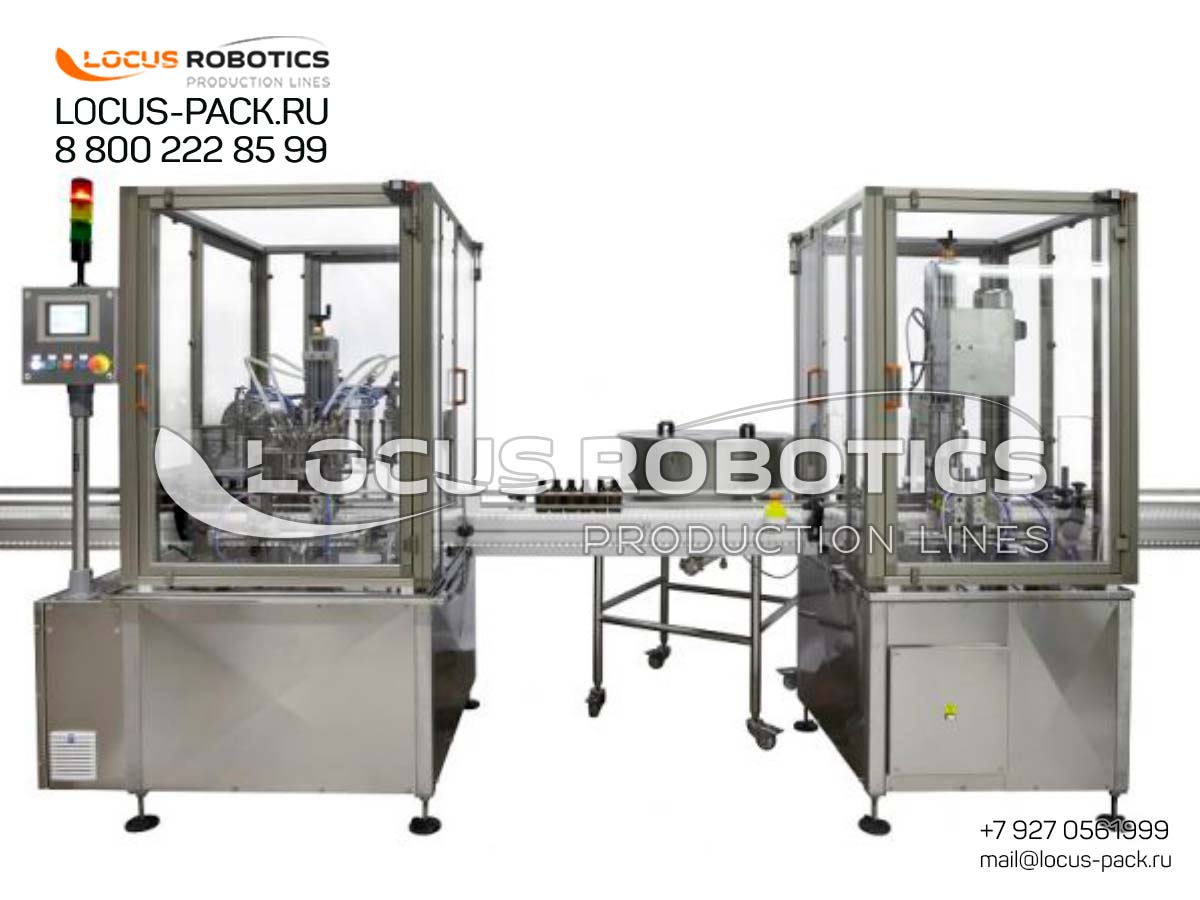
In the world of paints, coatings, and industrial compounds, consistency is not just a goal—it’s a fundamental specification. A minor variation in fill volume can alter critical pigment-to-binder ratios, leading to inconsistent color, gloss, or performance between batches. The R-200 Semi-Automatic Line is purpose-built to eliminate this variability, providing a reliable platform for custom color matching, production of tinting bases, and packaging of ready-mix industrial products. Its design bridges the gap between low-volume manual methods and high-cost, inflexible automation, making it perfect for small to medium-sized manufacturers, regional paint brands, and large companies producing limited editions or specialized industrial blends. By automating the most critical and error-prone step—the precise volumetric dose—this line empowers businesses to deliver superior, consistent product quality, strengthen their brand reputation, and compete effectively in markets where technical performance is paramount.
Mastering High-Viscosity and Pigment-Rich Formulations: The Key to Consistent Color and Quality
Colorants and many industrial adhesives are among the most challenging products to fill accurately. They are often shear-sensitive, thixotropic (viscosity changes under stress), and loaded with heavy pigments or fillers that can settle. The positive displacement action of the piston filler is uniquely suited to these challenges. Unlike pump systems that can shear and degrade product structure, the piston provides a gentle, plug-flow transfer. Its accuracy is based on a fixed cylinder volume, making it immune to changes in flow caused by viscosity. Furthermore, the product hopper can be equipped with a slow-speed agitator to keep pigments in uniform suspension throughout the entire production run, ensuring that every can receives an identical composition. This capability is essential for producing colorants that will tint base paints predictably and for ensuring the uniform performance of filled adhesives and sealants.
Beyond Paints: A Versatile Platform for Sealants, Adhesives, and Specialty Chemical Packaging
While optimized for colorants, the robust and chemically resistant construction of this line opens doors to numerous adjacent industries. With appropriate cleaning and, if necessary, a change of wetted seals, the same machine can efficiently package:
-
Construction & Automotive: Polyurethane sealants, silicone adhesives, body fillers, epoxy resins, windshield urethane.
-
Industrial Maintenance: Anti-corrosion coatings, thick lubricating greases, threadlockers, gasket makers.
-
Woodworking & Crafts: Stains, varnishes, specialized glues.
This versatility provides an outstanding return on investment, allowing a single piece of capital equipment to serve multiple product lines or enable a contract packager to attract a broader clientele. It’s a strategic asset for businesses looking to diversify or adapt to shifting market demands.
Comprehensive Technical Specifications for Demanding Industrial Fluid Packaging
For engineers and production planners, precise data ensures successful integration. Below is a full technical breakdown of the line’s capabilities.
| Parameter Category | Detailed Specification |
|---|---|
| Primary Product Applications | Paints & Coatings: Colorants, Tinting Bases, Concentrated Pigments, Stains, Varnishes. Chemicals: Synthetic Resins (epoxy, polyurethane), High-Viscosity Adhesives & Sealants, Gel Coats, Mastics, Fillers. |
| Product Physical State | Medium to Very High Viscosity Liquids, Pigment-Heavy Suspensions, Pastes, Gels. Non-Newtonian, thixotropic fluids. |
| Container Specification | Types: Metal Paint Cans (tinplate), Plastic Pails & Jars (HDPE, PP). Size Range: 0.5 Liters to 1.0 Liters (standard focus), adjustable for other sizes. |
| Closure Handling | Process: Manual application post-fill. Closure Types: Friction-fit lids, screw caps, press-on covers. The conveyor design allows easy access for operator capping. |
| Filling System | Type: Linear Piston Filler (Volumetric). Accuracy: ±0.5% or better, critical for color matching. Control: Foot pedal or sensor activation for hands-free operation. |
| Conveyance System | Type: Industrial Slat Conveyor. Material: Powder-coated steel or chemical-resistant plastic slats. Indexing: Automatic stop at filling station. |
| Control & Operation | Brain: Simple relay logic or micro-PLC. Interface: Start/Stop controls, fill counter, manual/auto selector. |
| Construction & Materials | Frame: Powder-coated carbon steel. Product Contact Parts: AISI 304 Stainless Steel (standard), 316L or coated options for aggressive solvents. Piston seals in Viton, EPDM, or PTFE. |
| Compliance & Safety | Design Standards: CE, industrial safety. Safety: Emergency stop, safety guarding around moving parts. Chemical Safety: Designed for use with flammable solvents (requires proper site ventilation and bonding/grounding). |
| Utilities & Requirements | Electrical: 220V or 380V single/three-phase, customizable. Air: May require compressed air for pneumatic nozzle lift (if equipped). Footprint: Compact, linear design for easy placement in labs or production areas. |
System Component Deep Dive: Precision Dosing and Robust Handling for Industrial Cans
Heavy-Duty Linear Piston Dosing System for High-Viscosity Products
This is not a standard liquid filler; it is built with reinforced components to handle demanding materials. The piston and cylinder are engineered with tighter tolerances and more powerful drives to generate the pressure needed to move thick, sticky products. The filling cycle is straightforward yet precise: the piston retracts, drawing product into the cylinder; the nozzle interfaces with the can (often via a snorkel tube to minimize splashing and aerosol generation); the piston then advances, displacing the exact volume into the container. Drip-free shut-off valves are crucial to prevent stringing or tailing of viscous products, keeping the can’s rim clean for proper lid sealing. The fill volume is adjusted via a mechanical stop or electronic setting, allowing quick changeover between different can sizes within the machine’s range.
Industrial-Grade Slat Conveyor and Manual Capping Integration
The slat conveyor provides a rugged and reliable transport solution. Its design is ideal for heavy, sometimes awkward metal cans, preventing tipping that can occur on belt conveyors. The conveyor automatically indexes, bringing each can into the exact same position under the filling nozzle, which is essential for repeatable accuracy. After filling, the can moves to an easy-access station where an operator simply places and secures the lid. This manual capping step is a conscious cost-saving and flexibility feature—it allows the line to handle a wide variety of lid types (snap-on, press-fit, screw) without the need for expensive and complex automatic capping heads. This makes the line perfectly suited for short runs where changing capping tooling would be inefficient.
Built for Chemical Resistance and Easy Maintenance in Demanding Factory Environments
Paint and chemical plants are tough on equipment. This line is built to last with a sealed electrical panel to protect against dust and moisture, and a frame finish resistant to incidental splashes. The choice of wetted materials is critical. We conduct a chemical compatibility review to ensure that seals, gaskets, and fluid path materials (whether 304 SS, 316L SS, or PTFE-lined) are suitable for your specific solvents and raw materials (glycols, alcohols, aromatic hydrocarbons). Maintenance is simplified: the piston assembly is designed for easy disassembly without special tools, allowing for quick seal replacement or a thorough cleaning when switching between highly incompatible products.
The Optimal Solution for Small-Batch Production, Custom Blending, and Laboratory Scale-Up
This semi-automatic line finds its ideal application in scenarios where flexibility and precision outweigh the need for sheer speed. It is perfectly suited for:
-
Custom Color Labs: Precisely filling customer-specific color matches or small batches of custom tints.
-
R&D and Pilot Plants: Scaling up new formulations from the lab bench to commercial trial batches with accurate, reproducible results.
-
Low-Volume / High-Mix Production: Manufacturing a wide range of specialized industrial products in quantities that do not justify a dedicated, high-speed automated line.
-
Secondary Packaging Line: Serving as a reliable unit for repackaging bulk materials into smaller, saleable containers.
Frequently Asked Questions on Packaging Lines for Colorants and Industrial Chemicals
-
Q: How do you prevent colorants from drying or skinning over in the filler between batches?
-
A: For products prone to skinning or drying, we recommend several strategies. The product hopper can be equipped with a tight-sealing lid. The fluid path can be designed to be easily flushed with a compatible solvent at the end of a run. For very sensitive products, optional nitrogen blanketing of the hopper can be provided to create an inert atmosphere that prevents oxidation and skin formation.
-
-
Q: Can this machine handle filled products, like adhesives with glass beads or metal particles?
-
A: Yes, piston fillers are well-suited for filled products. The key is proper configuration. We specify large-diameter pistons and nozzles to allow the passage of particles without clogging. The piston and cylinder materials are chosen for abrasion resistance (hardened coatings). The hopper agitator is selected to keep particles in suspension without crushing or damaging them.
-
-
Q: What is the cleaning procedure like when switching between very different products, such as from a water-based tint to a solvent-based resin?
-
A: A proper cleaning protocol is essential. The system is designed for easy access. Standard procedure involves: 1) Flushing with a compatible solvent, 2) Mechanical disassembly of the piston/cylinder and nozzles, 3) Manual cleaning of all wetted parts, 4) Reassembly and a final flush with the new product or a neutral solvent. For frequent changeovers, a duplicate set of fluid path components can be purchased, allowing one set to be cleaned offline while the other is in production, drastically reducing changeover downtime.
-
-
Q: Is this line suitable for use in an explosive atmosphere (ATEX zone) with flammable solvents?
-
A: The standard line is built to industrial safety standards but is not intrinsically ATEX-rated. For use with flammable solvents in classified zones, the line must be engineered as an ATEX-compliant system. This involves using explosion-proof (Ex-d) or pressurized (Ex-p) motors and control cabinets, non-sparking construction materials, and comprehensive grounding. This is a critical customization that must be discussed during the project specification phase.
-
📜 Schedule virtual airflow visualization test.
💡 Mention your: Target market (EU/US/Global South), Active ingredient, Required throughput.
🔬 Schedule virtual factory acceptance test with our engineers.
🏷️ Request Compliance Audit: Free gap analysis with throughput simulation.
🔍Ready to Eliminate Production Bottlenecks?
💎Need Industrial Production Automation?
✅ GMP Compliance Guarantee
✅ 24/7 Multilingual Support
✅ 24-month performance guarantee
✅ Local technicians in 18 countries
📈Start small, get a free production layout designed for your growth trajectory. Scale smarter with engineering support!
📥Free line configuration for your products, throughput validation testing!
🎓Contact Specialists for Packaging Equipment:
📄 On-Demand Engineering: Product-specific configurations in 1-2 weeks.
🔧 Spare Parts Kits: Region-specific inventory for <24hr delivery.
🧼Compliance Roadmap:
- CE, EAC, ISO 9001 certifications.
- GMP-ready: 316L SS contact parts, CIP/SIP capabilities.
- ATEX options for chemical solvents.