

At Locus Robotics, we engineer partnerships that transform production floors. This detailed portfolio goes beyond simple testimonials, offering a transparent, technical look at how our custom automated filling, capping, and packaging lines solve critical challenges for manufacturers worldwide. In the following in-depth case studies, you will discover the specific engineering decisions, system integrations, and measurable outcomes that define our approach. We specialize in building robust, scalable, and compliant automation for the dynamic industrial landscapes of Southeast Asia, the Middle East, Africa, Latin America, and Eastern Europe. Explore how we convert operational challenges into measurable gains in Overall Equipment Effectiveness (OEE), return on investment (ROI), and regulatory compliance.
High-Speed Aseptic Vial Filling & Inspection Monoblock for a Southeast Asian Vaccine Producer
The Client & Strategic Challenge:
A leading contract development and manufacturing organization (CDMO) in Southeast Asia won a major contract to supply a lyophilized (freeze-dried) vaccine for regional distribution. Their existing manual filling line was the plant’s primary bottleneck, with a maximum throughput of only 3,500 vials per hour. More critically, the manual processes introduced unacceptable contamination risks, and the lack of automated data logging made compliance with stringent WHO Good Manufacturing Practices (GMP) and PIC/S guidelines a constant audit vulnerability. The client needed a solution that guaranteed sterility, provided full electronic batch records, and could scale to meet volatile demand.
The Locus Robotics Engineering Solution:
We delivered a fully integrated, robotic Aseptic Vial Processing Monoblock. The system was designed as a closed, automated ecosystem to eliminate human intervention in the critical zone.
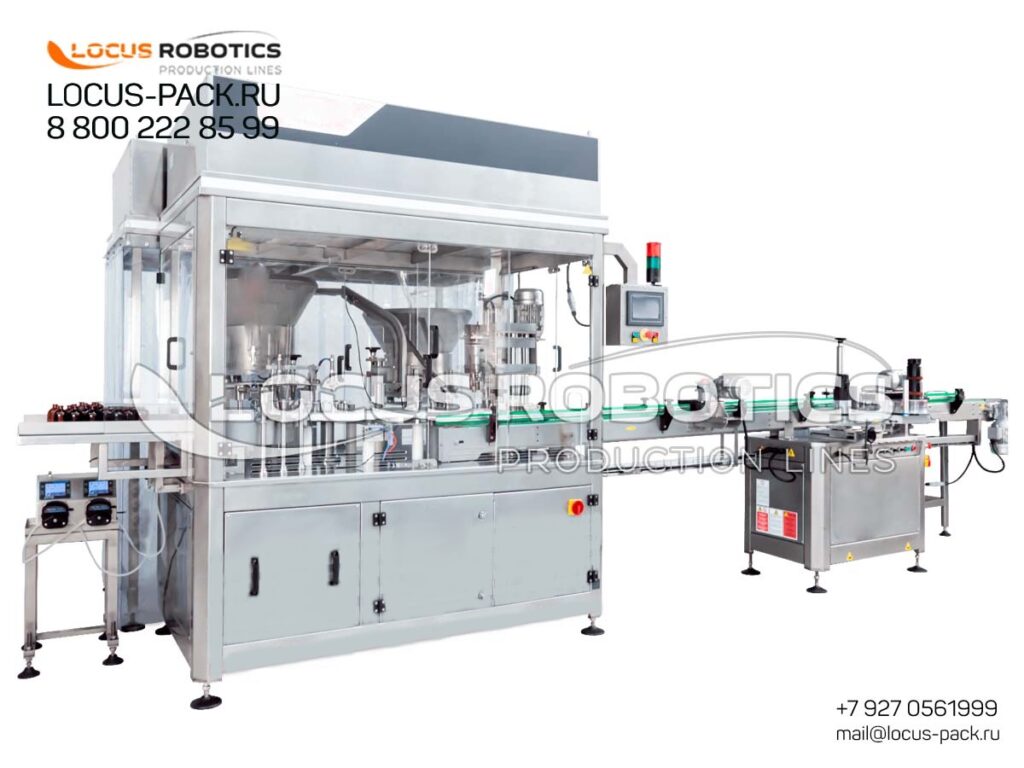
System Architecture & Core Modules:
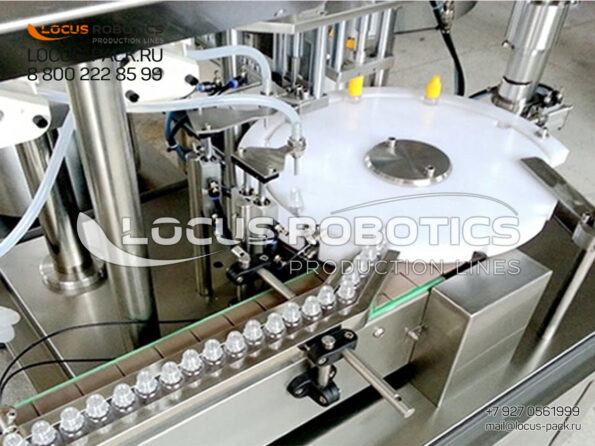
Automated Vial Unloading & WFI Rinsing: A robotic destacker fed vials into a high-pressure, multi-stage rinser using Water for Injection (WFI). An integrated vision system rejected vials with particulate matter or cosmetic defects before entry into the ISO 5 environment.
Class A Laminar Flow Enclosure: The entire filling and stoppering sequence occurred inside a custom-built, stainless steel laminar flow booth with continuous particulate monitoring.
Precision Peristaltic Pump Filling System: We utilized a sanitary peristaltic pump system with eight filling heads for gentle, precise handling of the sensitive biological fluid. The pump technology ensured no product shear and allowed for CIP (Clean-in-Place) and SIP (Steam-in-Place) without disassembly.
Robotic Stoppering & Sealing: A 6-axis collaborative robot (cobot) equipped with a soft-gripper head performed aseptic stoppering. A second robotic arm then applied and crimped aluminum seals with consistent, validated torque.
100% In-Line Vision Inspection: The most critical module was a multi-camera vision system. It performed checks for: fill volume accuracy (via meniscus detection), stopper presence and seating, crimp integrity, and vial surface defects. Any reject was automatically diverted by a pneumatic arm.
Technical Specifications & Integration:
Output: 12,000 vials per hour.
Fill Accuracy: ±0.5% for volumes from 2ml to 20ml.
Material: All product contact parts in AISI 316L stainless steel, with Electropolished (Ra <0.8 µm) surfaces.
Control: Centralized PLC with SCADA interface providing OEE dashboards, alarm tracking, and full electronic batch record (EBR) generation compliant with FDA 21 CFR Part 11.
Changeover: Tool-less adjustment for vial sizes from 10R to 20R.
Quantifiable Results & Strategic Impact:
Productivity & Efficiency: Achieved a 240% increase in throughput (from 3,500 to 12,000 vph) while simultaneously reducing direct labor on the line by 4 operators per shift.
Quality & Compliance: Zero critical contamination events recorded since commissioning. The automated batch records reduced batch release time by 60%. The line successfully passed audits from three different national regulatory agencies without major observations.
Return on Investment (ROI): The client achieved a full ROI in 14 months based on increased output, reduced labor costs, and near-elimination of batch loss due to contamination. The line’s flexibility also allowed them to secure two additional CDMO contracts.
Next-Generation Upgrade Path: The client has since integrated a lyophilizer loading/unloading robot from our portfolio, creating a fully automated cold-chain segment. Explore our suite of GMP Pharmaceutical Filling Lines and Robotic Integration Solutions.
Flexible, Multi-Product Piston Filling & Capping Line for a Middle Eastern Cosmetics Brand
The Client & Market-Driven Challenge:
A fast-growing beauty brand in the GCC region, catering to both domestic and export markets, faced a classic agility challenge. Their product portfolio ranged from low-viscosity facial mists and serums to high-viscosity hair masks and creams, packaged in over 30 different bottle, jar, and dropper formats. Their old, single-purpose rotary filler required 4-6 hour changeovers, making small-batch, limited-edition production runs economically unviable. Market responsiveness was slow, and cash was tied up in large inventories.
The Locus Robotics Engineering Solution:
We deployed a modular, «Smart Changeover» Linear Piston Filling and Screw Capping Line, engineered for agility.
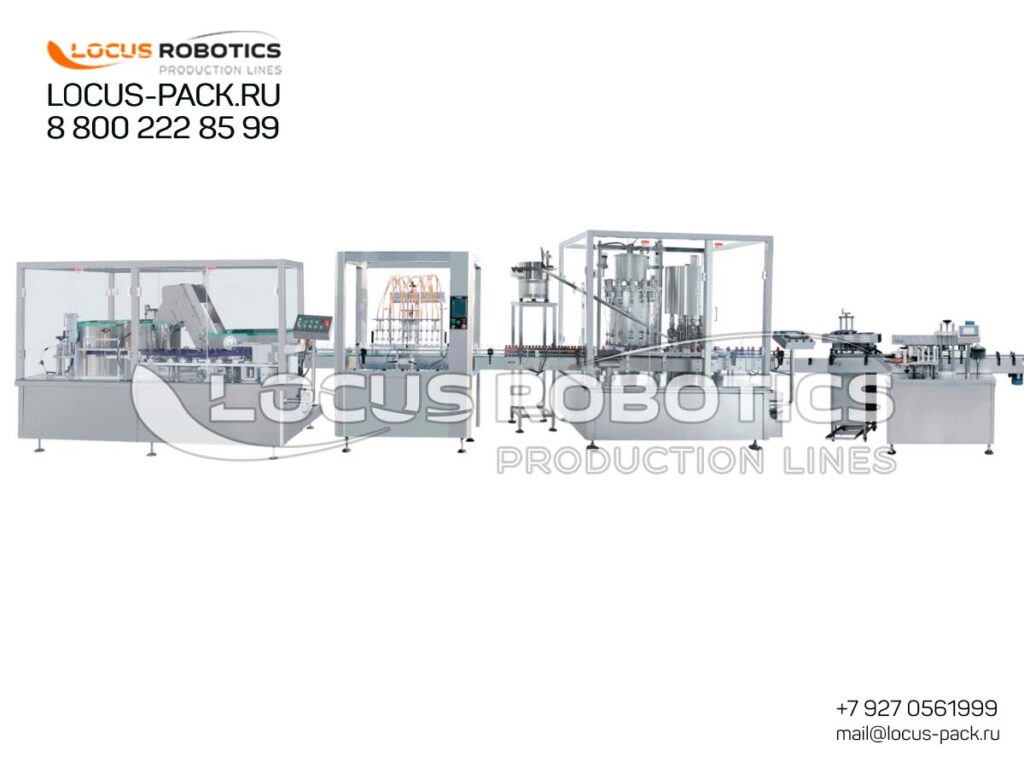
System Architecture & Innovation Focus:
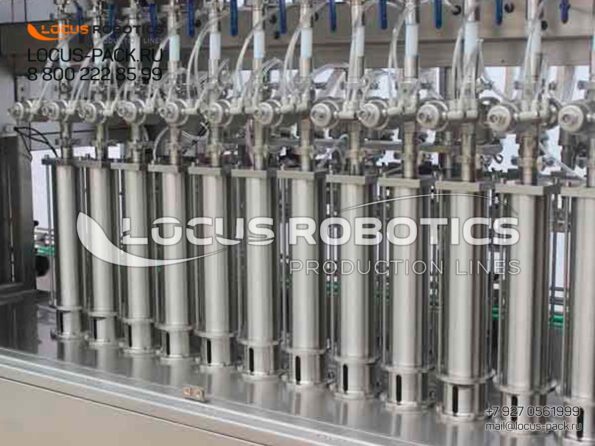
Multi-Pump, Multi-Product Filling Block: The core was a bank of six independent, servo-driven piston filling heads. Each head could be programmed with a different volume and product recipe, allowing the line to run product changeovers on-the-fly by simply calling a new recipe on the HMI. The system handled viscosities from 1 cP (water-like) to over 50,000 cP (pasty creams).
Patented Quick-Change Tooling System: We designed a magnetic and kinematic mounting system for filling nozzles, capping chucks, and guide rails. A format changeover for a completely different container family (e.g., from jars to dropper bottles) was reduced to under 12 minutes.
Intelligent Torque-Control Capping: The capping station featured six independent servo capping heads. Each head provided real-time torque and angle monitoring, ensuring perfect sealing for child-resistant caps, luxury wooden lids, and standard screw caps, with all data logged for quality assurance.
Integrated Vision & Labeling: A high-resolution camera system verified fill level, cap presence, and label placement before bottles entered an integrated wrap-around pressure-sensitive labeler.
Technical Specifications & Integration:
Speed: Up to 120 containers per minute (dependent on format).
Fill Accuracy: ±0.25% for volumes from 5ml to 1000ml.
Hygiene: AISI 304 stainless steel frame with easy-clean, open architecture. No product traps.
Control: 10-inch color HMI with recipe memory for over 100 SKUs. OEE tracking highlighted changeover and minor stoppage losses.
Quantifiable Results & Strategic Impact:
Operational Agility: Changeover time was reduced by 85%, from an average of 300 minutes to under 45 minutes for complex changes. This enabled a shift from monthly to weekly production cycles.
Waste & Cost Reduction: Precision piston filling cut product giveaway by over 28%, a massive saving when using high-value cosmetic actives. The ability to run smaller batches reduced inventory holding costs by 35%.
Business Growth: The line’s flexibility allowed the brand to launch 12 successful limited-edition products in one year, capturing market trends and significantly boosting brand engagement and revenue.
Next-Generation Upgrade Path: The line is pre-equipped for integration with a collaborative robot (cobot) for case packing, which the client plans to add as volumes grow. Discover our tailored Cosmetics & Personal Care Packaging Lines.
Turnkey, High-Speed Gravity Filling Line for an Eastern European Edible Oil & Sauce Producer
The Client & Export-Led Challenge:
A major food processor in Eastern Europe, supplying retailers across the EU, faced intense cost pressure and stringent food safety demands. Their legacy, 16-nozzle rotary filler from the 1990s suffered from consistent fill volume drift (±2.5%), frequent mechanical breakdowns, and had no provision for automated quality checks. This led to customer complaints, costly giveaways, and risked non-compliance with EU food safety (IFS/BRC) standards. They needed a line that combined brute-force reliability with intelligent process control to secure their export contracts.
The Locus Robotics Engineering Solution:
We engineered a «Brilliantly Simple» Gravity-Fed Rotary Filling and Capping Line, emphasizing durability, accuracy, and data transparency.
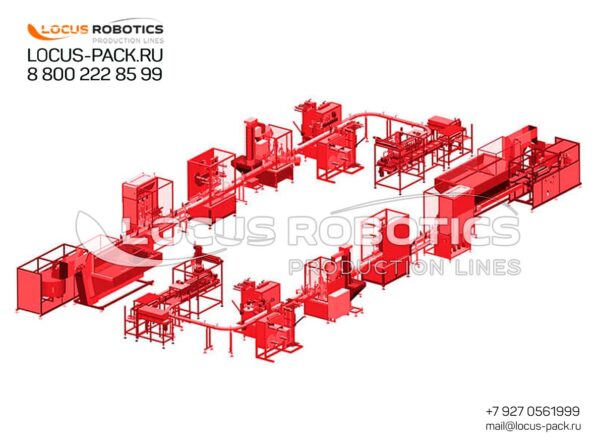
System Architecture & Robust Design:
High-Speed Bottle Handling: The line began with a low-noise, rotary unscrambler capable of handling 18,000 PET/glass bottles per hour, followed by a blower cleaning station to remove dust.
32-Nozzle Rotary Gravity Filler: The heart of the line was a stainless steel rotary filler utilizing a simple, yet ultra-reliable gravity principle for non-foaming liquids like oil and vinegar. An automatic level control in the product tank ensured consistent filling pressure. The lack of pumps meant minimal maintenance.
Magnetic Torque Screw Capping: Capping was performed by 8 magnetic torque capping heads, which absorbed vertical misalignment and provided precise, consistent torque for various cap sizes (28mm to 38mm).
Integrated Checkweighing & Data Integrity: Every single bottle passed over a high-speed checkweigher. Under- or over-weight bottles were automatically rejected. Crucially, all weight data was logged, providing real-time Statistical Process Control (SPC) charts on the operator screen and proof of due diligence for auditors.
Hot-Melt Labeling & Final Inspection: The line finished with a robust hot-melt labeler for full-body sleeves and a final vision check for label presence and skew.
Technical Specifications & Integration:
Output: 15,000 bottles per hour (for 1L PET).
Fill Accuracy: ±0.75% (a 70% improvement over the old line).
Hygiene & Safety: IP65-rated electrical panels, food-grade lubricants, and fully guarded safety circuits.
OEE & Downtime: The robust design achieved 99.5% mechanical availability in the first year. The SCADA system clearly tracked micro-stoppages for continuous improvement.
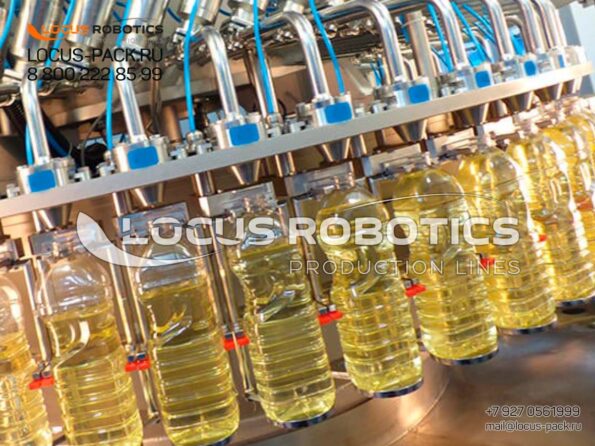
Quantifiable Results & Strategic Impact:
Financial Precision: The improvement in fill accuracy alone saved over €150,000 annually in product giveaway. Reduced maintenance costs added another €50,000 in savings.
Quality & Compliance: Customer complaints related to fill volume dropped to zero. The automated data logging provided an irrefutable quality record, simplifying audits and strengthening relationships with major retailers.
Production Surge: The line’s reliability and speed increased Overall Equipment Effectiveness (OEE) by over 40%, allowing the plant to confidently accept larger export orders.
Next-Generation Upgrade Path: The client is evaluating adding an automated palletizing robot at the line’s end to complete the automation circle. Learn more about our Industrial Food-Grade Filling Lines.
Rugged, Weigh-Based Drum & Jerrycan Filling System for an African Agrochemicals Manufacturer
The Client & Harsh-Environment Challenge:
A producer of liquid fertilizers and pesticides in West Africa operated in a punishing environment: high humidity, dust, and corrosive chemical fumes. Their entirely manual filling operation for 5L, 20L, and 200L containers was dangerous, slow (60 drums per shift), and highly inaccurate. Spillage was common, exposing workers to hazardous chemicals and wasting expensive product. They needed an affordable, extremely robust, and simple-to-operate system that could work reliably with minimal technical support.
The Locus Robotics Engineering Solution:
We implemented a Semi-Automatic, Load-Cell Based Gross Weight Filling System, designed for survival and simplicity.
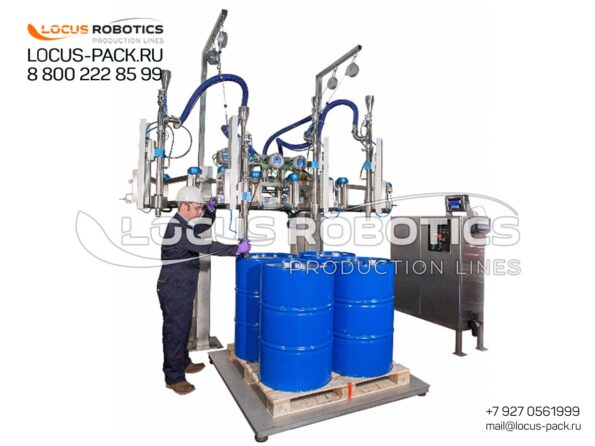
System Architecture & Durability Focus:
Heavy-Duty Filling Station: The system was built around a reinforced stainless steel frame with a chemical-resistant epoxy coating. The filling head featured a PTFE-coated nozzle and an automatic lifting mechanism to follow the liquid level and minimize fuming.
Precision Weighing & Control: The core innovation was the use of a high-accuracy load cell platform. The operator simply places an empty container (drum, jerrycan) on the platform, confirms the tare weight on the sealed, NEMA 4X-rated HMI, and initiates filling. The system fills to a pre-set gross weight, automatically compensating for container weight variations.
Safety-By-Design: Pneumatic clamping arms secured containers during filling. The entire control system was housed in a corrosion-resistant cabinet. Emergency stop buttons were placed at multiple points.
Simplified Operation: The user interface offered only three buttons: Tare, Start, and Stop. Recipe storage allowed for quick switching between products and container sizes.
Technical Specifications & Integration:
Throughput: Up to 120 x 20L jerrycans per hour.
Fill Accuracy: ±0.5% of set point, regardless of product foaming or viscosity changes.
Construction: Industrial-grade components throughout, chosen for availability in the local market to ease maintenance.
Power: Designed for unstable grid power, with built-in surge protection.
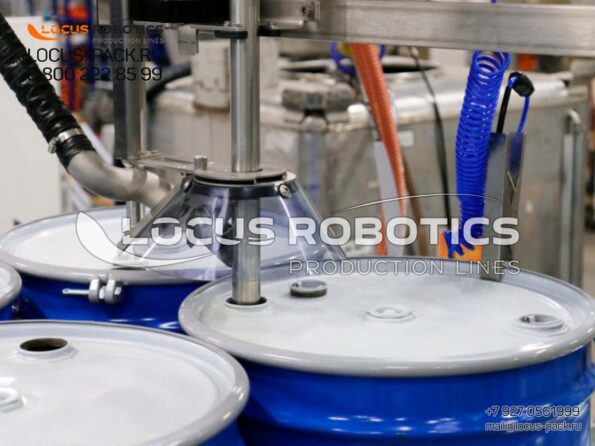
Quantifiable Results & Strategic Impact:
Safety Transformation: Eliminated direct operator exposure to chemicals during filling. The clean, contained process improved workplace safety ratings and morale.
Efficiency & Accuracy Leap: Output doubled to 120 drums per shift with the same crew. The ±0.5% accuracy ended costly overfilling, saving approximately 8% of total product volume previously lost as giveaway.
Total Cost of Ownership: The system’s simple design resulted in near-zero unplanned downtime in the first 18 months. Local technicians could perform all routine maintenance.
Next-Generation Upgrade Path: The system’s modular design allows for the future addition of a second filling head or integration with a simple conveyor and robotic palletizer. Contact us for a custom quote on chemical and hazardous liquid handling solutions.
Global Technology & Support Section
The Locus Robotics Difference:
Engineering for Global Markets
Our case studies share a common thread: solutions engineered for real-world conditions. We don’t just sell machines; we deliver production-ready systems backed by a partnership model designed for your success, no matter your location.
Regionalized Engineering: Our systems are pre-configured for regional power standards (220V/50Hz, 380V/60Hz, etc.), climate challenges (high humidity, dust protection via IP ratings), and built with an emphasis on serviceability with locally available tools and parts where possible.
Compliance as Standard: From GMP and FDA guidelines to HACCP, CE Marking, and local safety codes, we design compliance into the core of our systems, providing the documentation you need to navigate regulatory landscapes.
Data-Driven Performance: Our SCADA and OEE monitoring platforms turn your production line into a source of business intelligence. Track efficiency, predict maintenance, and generate the reports needed to justify further investment.
Lifecycle Partnership: Our support includes remote diagnostics, comprehensive training, and a global spare parts network. We measure our success by your long-term productivity gains and ROI.
Engineer Your Productivity Breakthrough
Your production challenge is unique. Let’s analyze your containers, products, throughput goals, and operational environment to design a solution that delivers measurable ROI.
Request Your Free, Confidential Line Audit | Download Our Technical Solutions Brochure
Contact Our Team


