

The era of rigid, single-purpose packaging machinery is giving way to a new paradigm of intelligent, adaptive automation. At Locus Robotics, we are pioneering this shift with our comprehensive range of modular robotic filling and packaging cells. These are not merely machines with added arms; they are reconfigurable cyber-physical systems where advanced robotics—Delta, SCARA, and 6-axis articulated robots—serve as the central nervous system. By replacing fixed mechanical actions with software-driven precision, we unlock unprecedented levels of flexibility, precision, and uptime for manufacturers facing volatile markets, short product lifecycles, and demanding labor environments. Our robotic solutions are engineered to thrive in the diverse operational landscapes of Southeast Asia, the Middle East, Africa, Latin America, and Eastern Europe, providing a scalable path to lights-out manufacturing and a formidable competitive edge in the global arena.
Robotic Archetypes & Their Strategic Application
Matching Robotic Kinematics to Your Packaging Task:
The first principle of successful robotic integration is selecting the correct manipulator architecture. Each robot family offers distinct advantages optimized for specific tasks within the packaging workflow.
Delta (Parallel) Robots: The Kings of Speed and Pick-and-Place.
Engineered for ultra-high-speed, low-payload operations within a confined cylindrical work envelope. With their lightweight arms mounted on a static base, Delta robots excel at primary packaging tasks: rapidly and gently picking empty vials, bottles, or preforms from a bulk supply and placing them in orientation on a conveyor; placing caps or droppers onto containers; and performing high-speed loading of blisters or clamshells. Their blistering cycle times, often exceeding 200 picks per minute, make them indispensable for high-volume pharmaceutical, cosmetics, and food packaging lines where throughput is paramount.SCARA Robots: Masters of Fast, Planar Precision.
Selective Compliance Assembly Robot Arm (SCARA) robots are optimized for fast, repeatable operations in a single horizontal plane with limited vertical movement. Their rigidity makes them perfect for assembly and secondary packaging tasks: precision screw capping of bottles and jars; inserting components into packages; applying pumps or sprayers; and ultrasonic welding or adhesive dispensing. For operations requiring intricate, fast movements within a defined shelf-like area, the SCARA offers an optimal blend of speed and accuracy.6-Axis Articulated Robots: The Ultimate in Flexibility and Payload.
Mimicking the human arm with full rotational freedom, these industrial workhorses provide maximum dexterity and reach. This makes them ideal for complex, end-of-line, and heavy-duty applications: mixed-SKU palletizing and depalletizing with complex layer patterns; case packing of irregular or fragile items; machine tending for multiple filling or capping stations; and precision applications like gluing, labeling, or vision-guided assembly where the toolpath is highly complex. Their ability to handle payloads from 5kg to over 500kg allows them to manage everything from small cartons to full drums.
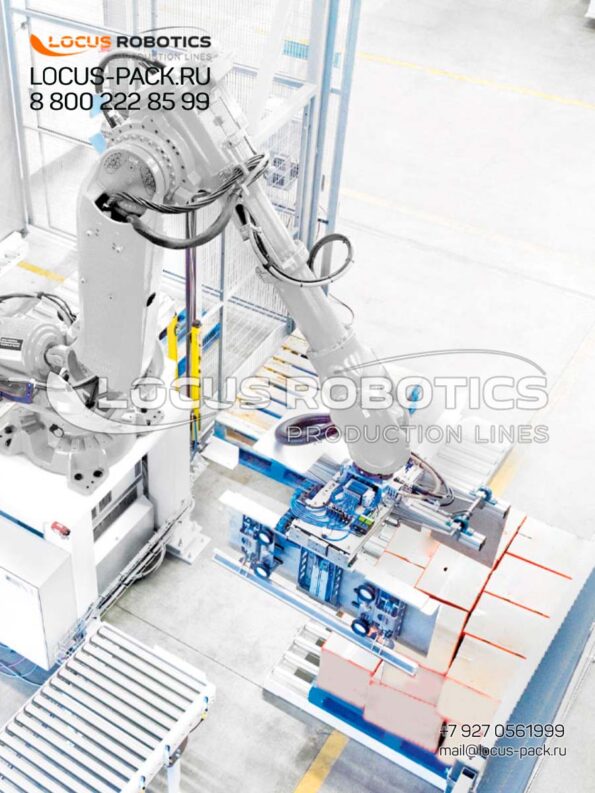
Selecting the right robot is a foundational engineering decision that determines the cell’s ultimate capabilities, speed, and return on investment.
The Robotic Cell Ecosystem – Peripherals & Integration
Beyond the Arm: Engineering a Cohesive Production Unit
A robot alone is an expensive paperweight. Its true potential is unlocked by a meticulously engineered ecosystem of peripherals that grant it perception, dexterity, and safety.
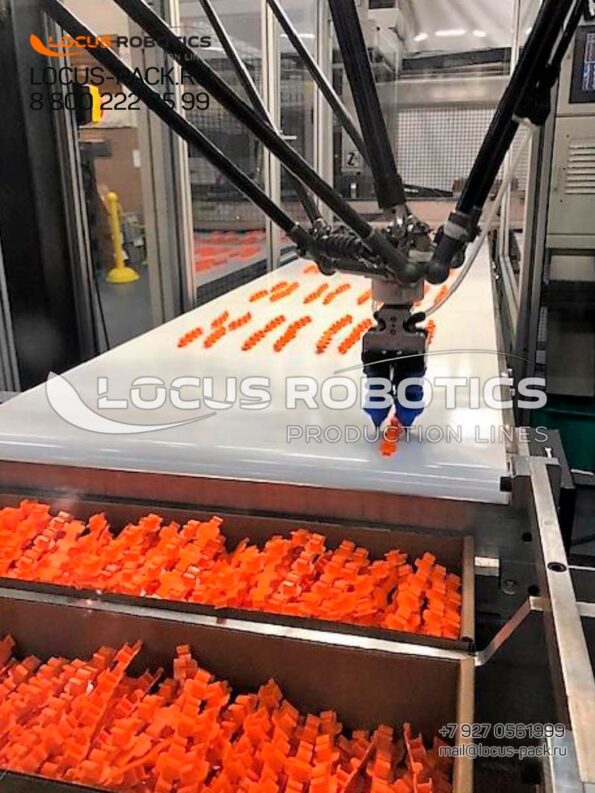
Perception & Guidance – Machine Vision Systems: 2D and 3D vision cameras act as the robot’s eyes. They enable random bin picking of unordered parts, precise guidance for assembly where tolerances are tight, and 100% quality verification (checking for cap presence, label alignment, fill level) before the robot handles the product. This allows the cell to adapt to real-world variability that would stall a traditional machine.
Dexterity & Sensitivity – Advanced End-Effectors: The end-of-arm tooling (EOAT) is the robot’s hand. We engineer and supply specialized tools: adaptive grippers that can handle multiple product shapes; vacuum cup arrays for gentle handling of glossy or delicate surfaces; magnetic grippers for ferrous parts; and tool changers that allow a single robot to perform multiple operations (e.g., pick, then screw, then place) by switching tools autonomously.
Control & Force Feedback – Sensors & Programming: Force-torque sensors allow the robot to perform delicate insertions (like placing a stopper in a vial) or compliant polishing and deburring. Modern offline programming and simulation software allow cells to be designed, tested, and optimized virtually before installation, drastically reducing commissioning time and risk.
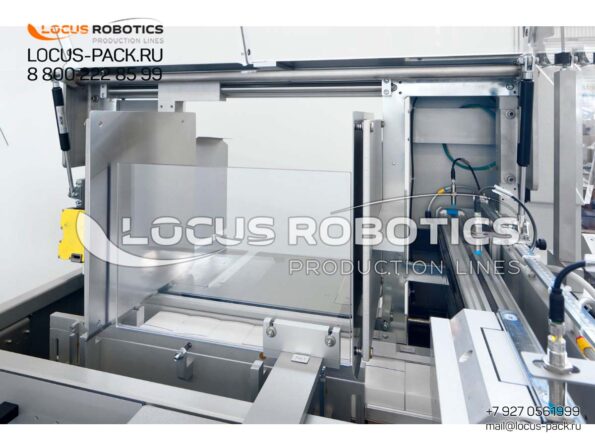
Safety & Integration – Guarding and Communication: The cell is enclosed with safety-rated fencing, light curtains, or laser scanners that stop the robot if a human enters the work envelope. The entire system is integrated via Ethernet/IP, PROFINET, or OPC UA protocols, allowing it to communicate seamlessly with upstream and downstream equipment (fillers, cappers, conveyors) and the factory’s MES/SCADA system.
This holistic integration transforms an automated task into an intelligent, adaptable, and data-rich production module.
Industry-Specific Applications & Configurations
Deploying Robotic Intelligence Where It Matters Most
The flexibility of robotics finds powerful applications across our core industries, solving unique and persistent challenges.
Pharmaceuticals & Biotechnology: Here, robotics is a compliance and quality enabler. We deploy cleanroom-rated (ISO Class 5/7) robots for aseptic handling of vials and syringes, loading/unloading lyophilizers, and precision assembly of medical devices. Robots eliminate human variability, reduce contamination risk, and provide a complete, validated audit trail for regulatory bodies (FDA, EMA).
Food & Beverage: Robotics tackles hygiene and labor-intensive tasks. Applications include primary packaging (placing products into trays or cups), secondary packaging (case packing bottles, cans), palletizing finished goods, and high-speed sorting and grading based on vision inspection. Hygienic design (IP69K washdown) and food-grade materials are standard.
Cosmetics & Personal Care: In a world driven by aesthetics and SKU proliferation, robots provide agility. They enable small-batch, high-mix production with rapid changeovers, perform precise labeling on curved containers, and execute complex assembly of compacts and applicators with consistent quality.
Chemicals & Industrial: Robots remove humans from harsh or hazardous environments. They fill and seal corrosive or flammable liquids, palletize heavy drums and bags, and assemble industrial components with relentless consistency. Explosion-proof (ATEX) configurations are available for volatile atmospheres.
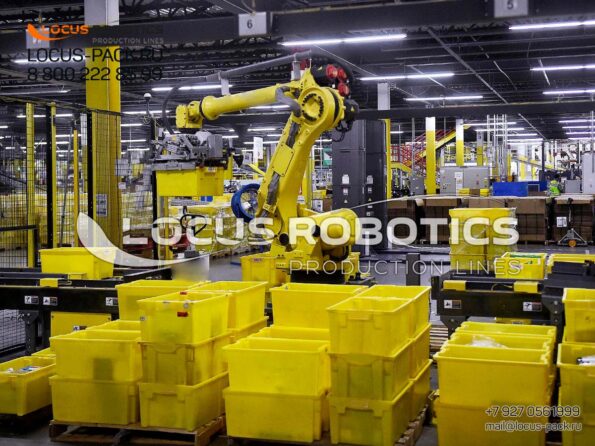
In each case, the robotic cell is not just automating a task; it is elevating the entire production standard, ensuring consistency, safety, and traceability.
The Locus Robotics Implementation & Partnership Pathway
Your Journey to Flexible Automation
Implementing a robotic solution is a strategic project. Our proven pathway ensures success from concept to full production.
Feasibility Study & Concept Design: We analyze your products, processes, and goals to determine if robotics is the optimal solution. We then create a preliminary cell layout and ROI analysis.
Simulation & Digital Twin Development: Using advanced software, we build a digital twin of the proposed cell. We simulate cycle times, robot reach, and detect potential collisions, de-risking the project before any metal is cut.
Cell Design, Build & Factory Acceptance Test (FAT): The cell is engineered, assembled, and rigorously tested in our facility. You are invited to witness the FAT, where performance against agreed specifications is validated.
Installation, Commissioning & Site Acceptance Test (SAT): Our engineers install the cell, integrate it with your line, and train your personnel. We conduct the SAT to ensure flawless operation in your plant.
Lifelong Support & Optimization: Through remote diagnostics, spare parts, and software updates, we ensure your cell remains a productive asset. As your needs evolve, the cell can be reprogrammed and reconfigured for new tasks.
Ready to redefine flexibility and efficiency in your packaging operations? Contact our Robotic Automation Specialists for a detailed consultation.
Contact Our Team


