
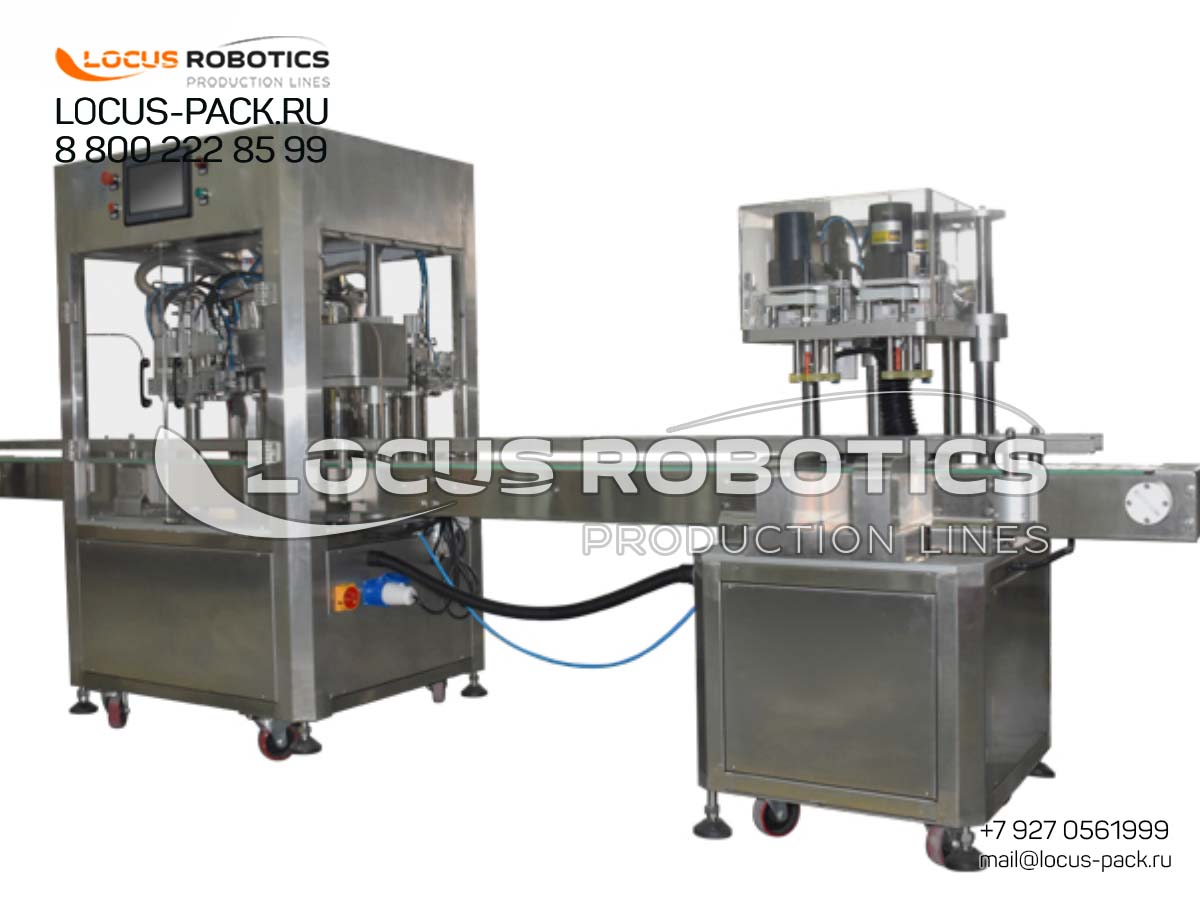
Description
The Ideal Balance of Automation and Affordability for Small to Medium-Scale Chemical and Cosmetic Producers
Navigating the transition from purely manual packaging to full-scale automation can be daunting, especially for growing businesses focused on cost control and operational flexibility. The R-200 Semi-Automatic Line is strategically designed to bridge this gap. It targets the most labor-intensive and quality-critical steps—precise filling and the complex task of attaching functional closures—and automates them with precision. This approach delivers an immediate and dramatic improvement in output consistency and worker productivity, while allowing operators to retain control over the loading and offloading of containers. This model is exceptionally effective for short production runs, frequent product changeovers, and markets where labor cost savings must be balanced with accessible machinery pricing. It empowers manufacturers of household cleaners, automotive shampoos, agricultural chemicals, lubricants, and cosmetic lotions to compete with higher quality packaging, reduce physical strain on workers, and scale their operations in a manageable, financially sustainable way.
Engineered for Versatility: Seamlessly Switching Between Industrial Cleaners and Personal Care Products
One of the most powerful features of this line is its inherent flexibility across different industries. The sanitary construction of the piston filler and its compatibility with a broad viscosity range allow the same machine to process aggressive industrial degreasers in the morning and gentle hair conditioners or hand sanitizers in the afternoon, following a proper cleaning procedure. The capping station’s programmability and quick-change tooling enable a swift shift from applying heavy-duty trigger sprayers on gallon-sized chemical bottles to attaching fine-mist spray pumps or flip-top caps with dabber sticks on cosmetic containers. This versatility makes the R-200 an invaluable asset for contract packaging facilities serving multiple clients, as well as for brands that are expanding their own product portfolios. It protects your investment by ensuring the equipment remains useful and productive even as your business evolves and enters new market segments.
Precision Meets Practicality: Reducing Labor Costs While Guaranteeing Fill Accuracy and Secure Closures
The economic argument for this semi-automatic line is compelling. Manually filling bottles to a consistent volume is slow and inherently wasteful, leading to product giveaway or underfilled containers. Manually screwing on trigger sprayers is tedious, can lead to repetitive strain injuries, and often results in poorly attached closures that leak or malfunction. The R-200 automates these problematic steps with machine-like consistency. The piston filler delivers accuracy within ±0.5%, directly reducing raw material costs. The automatic capper applies each closure with identical, preset torque, ensuring a perfect seal every time and eliminating customer complaints about faulty sprayers or leaky caps. This translates to lower labor costs per unit, a significant reduction in product waste, and a dramatic decrease in quality-related returns, delivering a fast and measurable return on investment that is critically important for businesses in competitive, cost-sensitive markets.
Detailed Technical Specifications and System Configuration for Flexible Operations
For production managers, understanding the precise capabilities is key to integration. The table below provides a complete technical overview of the R-200 Semi-Automatic Line.
| Parameter Category | Detailed Specification |
|---|---|
| Primary Product Applications | Household & Industrial Chemicals: All-purpose cleaners, degreasers, dish soap, laundry detergent. Automotive: Shampoos, waxes, tire shines, engine cleaners. Agrochemicals: Liquid fertilizers, pesticides (non-corrosive). Cosmetics & Personal Care: Lotions, oils, gel soaps, sanitizers. |
| Product Physical State | Low to High Viscosity Liquids, Gels, and Foaming Formulations. |
| Container Specification | Types: Plastic (HDPE, PET) Bottles, Jugs, Cylindrical Containers. Size Range: Typically 250ml to 5 Liters. The system is adjustable for different heights and diameters. |
| Closure Systems | Type 1: Trigger Sprayers (standard and chemical-resistant). Type 2: Dosing Caps with integrated applicator sticks or rods. Type 3: Standard screw caps (with optional head change). |
| Filling System | Type: Linear Piston Doser (Volumetric). Accuracy: ±0.5% to ±1.0%. Control: Manual foot pedal or automatic sensor activation. |
| Capping System | Type: Automatic Station with Two Independent Trigger Heads. Function: Picks closure from a bowl feeder, aligns, and screws onto bottle with controlled torque. Quick-Change: Heads can be swapped for different closure types. |
| Conveyance System | Type: Slat Conveyor (Plastic or Stainless Steel). Operation: Manually loaded, then automatically indexes bottles to filler and capper stations. |
| Control & Automation | Brain: Industrial PLC for sequence control. Interface: Simple push-button panel with speed adjustment and counters. |
| Construction & Materials | Frame: Powder-coated carbon steel. Product Contact Parts: AISI 304 or 316L Stainless Steel (optional for corrosive chemicals). Conveyor: Chemical-resistant slats. |
| Compliance & Safety | Design Standards: CE Marked, industrial safety compliant. Guarding: Includes safety interlocks and emergency stop. GMP-Ready: 316L SS and CIP capability available as an option for higher hygiene applications. |
| Utilities & Requirements | Electrical: Customizable for global voltages (110V, 220V, 380V). Air: Requires clean, dry compressed air for pneumatic capping heads. Floor Space: Very compact, linear layout ideal for smaller production rooms. |
Core Component Analysis: The Synergy of Manual Loading, Automatic Filling, and Robotic Capping
Linear Piston Dosing System: The Heart of Consistent, Volumetric Accuracy
The linear piston filler operates on a simple but supremely effective principle. An operator places an empty bottle on the conveyor at the loading point. When the bottle is in position (either detected by a sensor or activated by a foot pedal), the filling cycle begins. A piston retracts within its cylinder, drawing a precise volume of product from the supply tank. The filling nozzle then lowers (or the bottle raises), and the piston pushes the exact product portion into the container. This positive displacement method is key—it is unaffected by changes in the product’s viscosity, temperature, or foaming tendency, which can plague other filling methods. This guarantees that a runny glass cleaner and a thick fabric softener are both filled with the same high level of accuracy, batch after batch.
Dual-Head Trigger Capping Station: Automating the Most Complex Closure Applications
Attaching trigger sprayers is notoriously difficult to automate reliably due to their irregular shape and the need to align the trigger mechanism. This line’s capping station solves this with two programmable servo or pneumatic «trigger» heads. Closures are fed from a vibratory bowl that orients them correctly. The first head picks up the closure. As the filled bottle arrives, the head precisely places the closure onto the bottle neck and begins the screwing motion. The use of two heads can allow for higher speeds or a two-stage application process. The torque is carefully controlled to ensure the sprayer is seated securely enough to prevent leaks but not so tight as to damage the bottle threads or the closure’s internal gaskets. Switching to dosing caps with sticks typically involves changing the bowl tooling and the gripping fingers on the capping head, a process designed to be completed in minutes.
Robust Slat Conveyor System: Ensuring Stable Container Transport
The slat conveyor provides a stable, durable backbone for the line. Unlike belt conveyors, slat conveyors are made of interlocking plastic or metal plates, making them highly resistant to wear, spills, and heavy containers. They provide a positive drive, meaning bottles are less to tip over. The conveyor’s speed is synchronized with the operation of the filler and capper. Its manual loading design keeps the overall system cost low and allows an operator to visually inspect each empty bottle before it enters the automated cycle, providing a final quality check for defects.
Built for Durability and Safety in Demanding Chemical and Cosmetic Manufacturing Environments
This machine is built for a factory floor. The powder-coated frame resists corrosion from occasional spills. All electrical components are housed in sealed enclosures for protection. Critical safety features include physical guards around moving parts, safety interlocks that halt operation if a guard is opened, and prominently placed emergency stop buttons. For handling flammable chemicals, the entire system can be specified with ATEX-certified components to prevent ignition risks. This robust and safe design ensures long service life and protects your workforce, making it a responsible choice for industrial settings.
Maximizing Return on Investment with Low Operational Costs and High Reliability in Growth Markets
For businesses in high-growth regions, equipment must be economical to purchase and run. The R-200 line excels here. Its semi-automatic nature requires less electrical complexity and no sophisticated sensors for bottle feeding, keeping the purchase price accessible. It consumes minimal electricity and compressed air. Its mechanical design is simple and robust, leading to high reliability and low maintenance costs—a crucial factor where technical service may not be readily available locally. Furthermore, our company supports this with region-specific spare parts kits stocked in Dubai, Hanoi, and Lagos, promising less than 24-hour delivery to minimize potential downtime. This combination of low initial cost, low operating expense, and strong local support delivers an exceptionally attractive total cost of ownership and a rapid payback period.
Frequently Asked Questions on Implementing a Semi-Automatic Filling and Capping Solution
-
Q: What is the expected output (bottles per hour) of this semi-automatic line?
-
A: Output is highly dependent on operator speed, bottle size, and product viscosity. A typical range for a single operator managing loading, monitoring, and offloading is 200 to 600 bottles per hour. Throughput can approach that of a basic automatic line if a two-person team is used (one loading, one offloading). The system’s speed is ultimately constrained by the manual loading step, which is the trade-off for its lower cost and simplicity.
-
-
Q: Can this line handle glass bottles?
-
A: Yes, it can. However, careful configuration is needed. The slat conveyor can be fitted with softer or padded slats to prevent glass-on-metal contact. More importantly, the capping station’s torque must be precisely calibrated for glass threads, which are more brittle than plastic. We would also recommend optional bottle neck guides on the conveyor to ensure glass bottles are perfectly aligned before capping to prevent breakage.
-
-
Q: How difficult is it to change from filling one product to another, or changing bottle sizes?
-
A: Changeover is straightforward, aligning with the line’s flexible design. For a different product, you would clean the product hopper and piston assembly (which is designed for easy access) and adjust the fill volume on the piston stroke adjustment. Changing bottle sizes involves adjusting the guide rails on the conveyor for the new diameter and height, and potentially changing the filling nozzle. These are all simple, tool-assisted adjustments that can be done in 15-30 minutes.
-
-
Q: Is training provided for our operators?
-
A: Absolutely. Comprehensive operator training is a standard part of our commissioning service. Our technician will provide hands-on training for your team on-site, covering safe operation, daily startup/shutdown procedures, routine cleaning, fill volume adjustment, basic troubleshooting, and the changeover process. We also provide detailed illustrated manuals in English and other languages.
-
📜 Schedule virtual airflow visualization test.
💡 Mention your: Target market (EU/US/Global South), Active ingredient, Required throughput.
🔬 Schedule virtual factory acceptance test with our engineers.
🏷️ Request Compliance Audit: Free gap analysis with throughput simulation.
🔍Ready to Eliminate Production Bottlenecks?
💎Need Industrial Production Automation?
✅ GMP Compliance Guarantee
✅ 24/7 Multilingual Support
✅ 24-month performance guarantee
✅ Local technicians in 18 countries
📈Start small, get a free production layout designed for your growth trajectory. Scale smarter with engineering support!
📥Free line configuration for your products, throughput validation testing!
🎓Contact Specialists for Packaging Equipment:
📄 On-Demand Engineering: Product-specific configurations in 1-2 weeks.
🔧 Spare Parts Kits: Region-specific inventory for <24hr delivery.
🧼Compliance Roadmap:
- CE, EAC, ISO 9001 certifications.
- GMP-ready: 316L SS contact parts, CIP/SIP capabilities.
- ATEX options for chemical solvents.